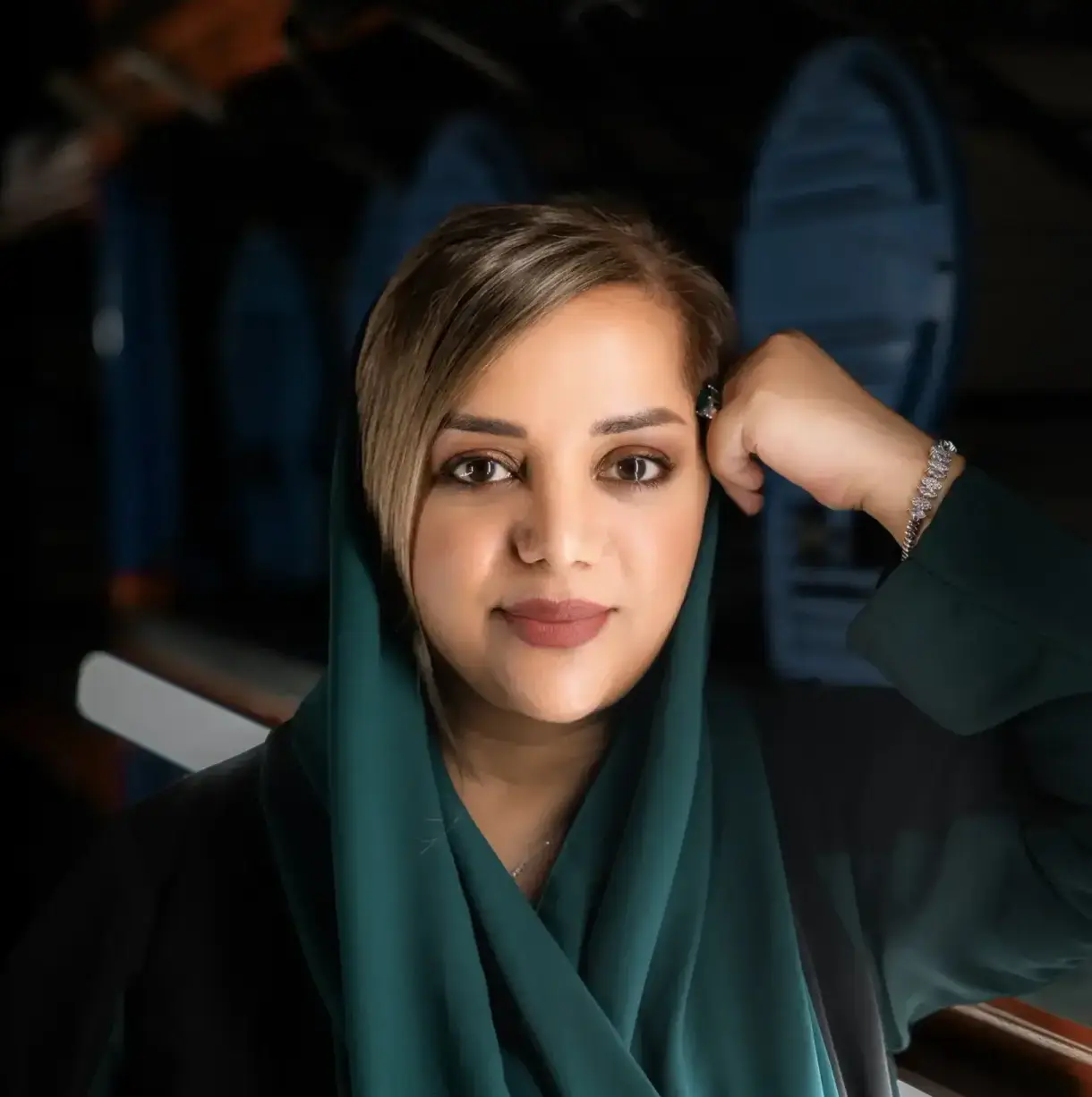


When Nayla Al Khaja steps onto a set, she isn’t just directing a film – she’s redefining an industry. As the UAE’s first female film director, she has spent more than two decades carving out space where none existed, building a cinematic language rooted in Emirati culture yet courageous enough to speak to the world. Today, her name stands as both a milestone and a movement.
“I grew up in Dubai at a time when filmmaking wasn’t considered a viable path, especially for women,” she says. “But storytelling captivated me early.”
That fascination ignited a journey filled with firsts: the first Emirati woman to study film abroad, the first to return and build a production ecosystem from scratch, the first to take local stories to global festivals, and the first to prove – boldly, repeatedly – that Emirati cinema belongs on the world stage.
Nayla’s path has been defined not by access, but by audacity. “My journey has been marked by constant ‘firsts’ and the responsibility that comes with breaking new ground,” she reflects. “Every door I’ve opened came from refusing to wait for permission.”
It’s this refusal – this stubborn, purposeful defiance – that’s allowed her to build what didn’t exist: an industry, a community, and a creative pipeline for Emirati filmmakers.
Her films are known for their emotional depth and cultural honesty. “I aim to amplify Emirati stories, challenge stereotypes, and open doors for the next generation,” she says. “I want to create work that resonates globally while staying rooted in our culture.”
This duality – global ambition, local heart – has become her signature.
Of all her achievements, one moment stands out: completing Baab, her dark-fantasy drama scored by two time Oscar winner A.R. Rahman and shot by Rogier Stoffers.
“It was an ambitious, culturally rooted fantasy drama that pushed every creative boundary I had,” she says. “Watching an Emirati story come to life at that scale felt historic.”
Baab is more than a film; it’s a statement – proof that regional cinema can be bold, daring, and technically world-class. It affirmed something Nayla had long believed: “Our local stories do travel. When told authentically, they resonate far beyond our borders.”
For Nayla, filmmaking has never been a solitary act. It is a responsibility. “The people who benefit most from my work are emerging filmmakers, especially women, who gain visibility, mentorship, and new opportunities,” she says. “Audiences also benefit from experiencing authentic Emirati stories on a global stage.”
She mentors young creatives, advocates for equitable representation, and helps build the UAE’s film ecosystem piece by piece. She wants her success not to be an exception, but a model.
“What matters most to me is building an ecosystem where young creators, especially women, have access, mentorship, and real opportunities to thrive,” she explains. “I want my work to help normalise Emirati films on the world stage.”
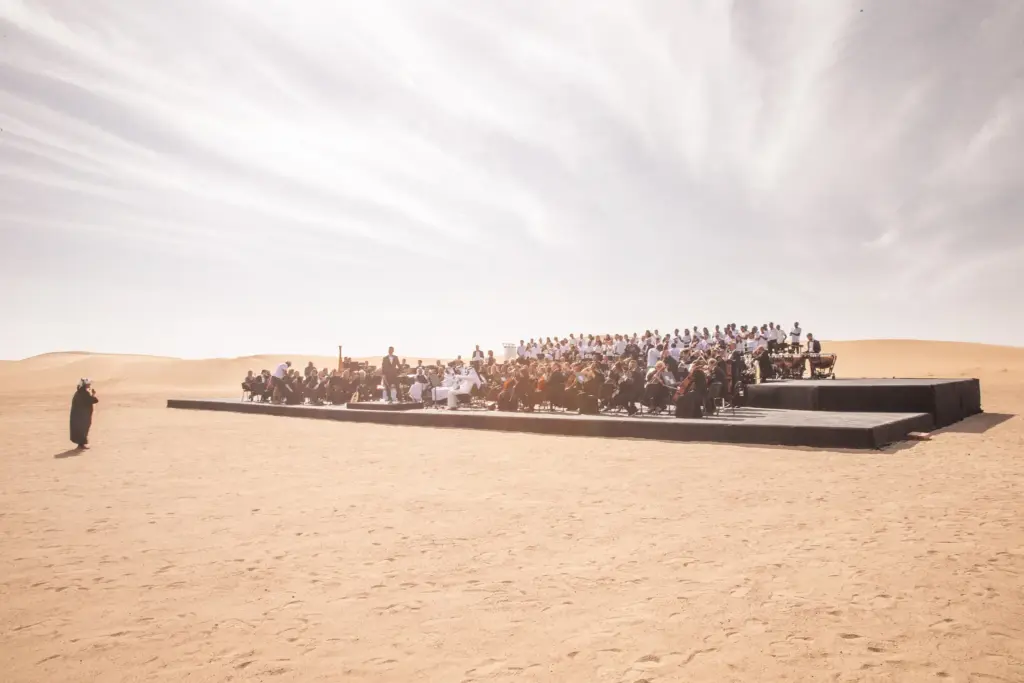
Entering a field that didn’t yet exist for Emirati women meant that Nayla became both pioneer and compass. “There were no clear paths, no mentors, and often very little belief that I belonged behind a camera,” she says. “I overcame it by creating my own opportunities and building teams from scratch.”
Persistence and community became her anchor. “What got me through was the conviction that our stories deserved to be seen,” she adds.
Her identity – as an Emirati woman – became both challenge and strength. “It opened doors to unique stories, but it also meant challenging expectations in an industry where someone like me wasn’t expected to lead,” she recalls. “My voice became my strategy.”
Nayla sees a cinematic landscape on the brink of transformation. “In the next decade, we’ll see a surge in hyper-local storytelling with global reach,” she predicts. “Independent filmmakers will have more power than ever to bypass traditional gatekeepers.”
She wants to help position the UAE as “a vibrant hub for world cinema,” where diverse voices shape narratives and audiences “hungry for fresh perspectives” discover Emirati stories.
What excites her most is the rise of new creators. “Filmmakers here are unafraid to challenge norms and expand what Emirati cinema can be,” she says. “That inspires me deeply.”
Ask Nayla why storytelling matters, and she answers like someone whose life has been shaped by it – and who is shaping countless others through it.
“Storytelling has the power to change how we see ourselves and each other,” she says. “It sparks empathy and inspires action in ways data never can.” For her, amplifying underrepresented voices is not just art; it is impact.
Looking back, Nayla would tell her younger self one thing: trust your voice. “Every obstacle was shaping the filmmaker I would become,” she says. “The stories you’re afraid to tell are the ones that will open the biggest doors.”
And to women forging their own path: “Trust your instincts and take up space without apologising. Don’t wait for perfect conditions – start with what you have. Your voice, perspective, and courage are your greatest assets.”
She is equally clear about the biggest barrier facing women in film: “Talent isn’t the problem; opportunity is.” Her solution: more pathways, more transparency, more women in positions of power.
Nayla’s vision is bold, but beautifully simple: “I hope I helped open doors, shifted perceptions, and proved that stories from our part of the world can stand confidently among the world’s best.”
Her billboard to the world captures her essence perfectly: “Create with courage. Lead with purpose. Inspire the next generation.”