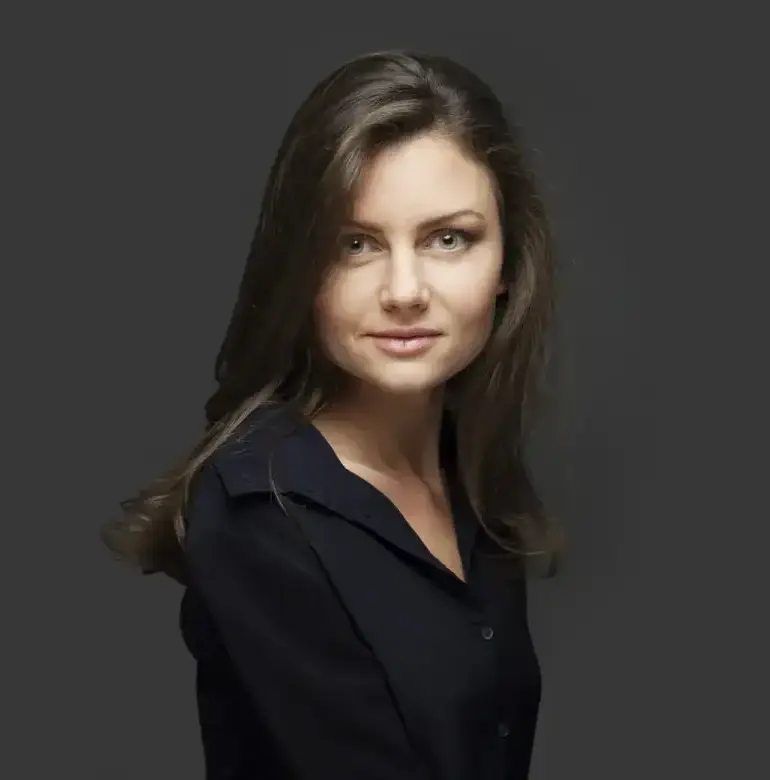


Irina Karagyaur is passionate about helping companies and creatives discover the benefits of the web3 token economy and simplifying their transformative digital journey. She works to make a positive environmental and social impact by implementing creative business models supported by NFTs.
Irina is Head of Ecosystem Growth and Business Development at Unique Network, founder of BQ9, Head Ambassador for Western Europe at Polkadot Network, London’s Region CoChair to FIBREE (Foundation for International Blockchain and Real Estate Expertise), cocoordinator of the DigitalArt4Climate (initiative in partnership with UN-Habitat), and a member of ImpactNFT Alliance Advisory Council.
The World Wide Web, or just web2, is a centralized layer over the Internet which is deeply associated with giant tech organizations. Due to its flexible functionalities web2 has experienced exponential growth and has fulfilled its mission to drive the tech revolution in the early 21st Century, and with it, the spread of communication around the planet. However, the centralized nature of web2 has also brought existential threats to humankind related to privacy, fundamental rights, and dysfunctional business models. All of them are conspicuous well known problems of our times.
The next layer to be developed over the Internet, web3, promises to overcome web2 challenges by combining already available technologies and establishing decentralized models. In this scenario, Irina believes that the token economy, in particular NFTs, can ignite and accelerate the environmental and social impact of the United Nations’ Sustainable Development Goals (SDGs).
“Since we are at the beginning of a paradigm shift, to truly understand the benefits, we have to focus on the big picture,” said Irina. “Currently, our societies need to solve inequality, poverty, and human rights issues which web2 cannot solve. On the other hand, a stack of new web3 technology, such as decentralized networks, Solid’s privacy Pods, and blockchain tech already offers the opportunity to provide the right approach for meeting the SDGs.”
The already available technologies, such as Interplanetary File Systems (IFPS), blockchain, and Sir Tim Berners-Lee’s Solid project, can be implemented in constructive and original ways, suggests Irina. “In our new paradigm, technologies can be combined like Lego pieces, and there’s no need for a one-size-fits-all approach to make things work. Each of web2’s challenges can be addressed via different techniques to protect our rights, health, wealth, and to improve our economic standards.”
Web3’s decentralized models can harness change, and Irina believes that the token economy can boost the digital transformation processes by giving back the power to the users through data ownership and DAOs (decentralized autonomous organizations). “The current platform-based internet will not be able to host the Open Metaverse without causing mammoth human rights problems. After all, no one wants a private centralized platform to own all your personal data, including biometrics or DNA info, because it will mean that we’re building a totalitarian system. On the other hand, we have the opportunity to shift from a data driven approach to an incentive model for business that rewards users for using platforms, as Jaron Lanier has been advocating for AI systems. In that matter it is relevant to ask: To what extent should or could our content creation be considered an integral part of AI software? As we become, as individuals or collectively, the fundamental input feeding data to AI, we’ll have good reasons to believe that we should rethink our property rights and set our priorities”.
Irina forecasts an exponential growth for the web3 industry. “The key is to learn how these integrations will solve relevant pains more efficiently. It’s vital to listen to the customer’s demands because we’re going through transcendental changes that are directly modifying supply chains, and redefining currency standards. As a consequence, gamification schemes, smart wallets, energy offset systems, and the return of data property rights to their legitimate owners, with the possibility of its monetization, are just some examples of the changes that we will see.”
Unique Network is an NFT chain built for Polkadot and Kusama. At Unique Network, Irina focuses on establishing strategic partnerships and ecosystem building to onboard businesses to NFT spaces via a 3rd generation scalable Polkadot para-chain for composable NFTs (open source and available to anyone).
Leaders like Irina credit web3 with the potential to sidestep web2’s built-in biases perpetuated by the financial system. New technical developments such as refungibility and composability have already pushed NFTs to the point of no return. “Thanks to them, crypto assets will never be reduced again to only be cryptocurrency. We now have the opportunity to own, but also to compose and combine our assets (real estate, art, currencies, etc.). We will need to rethink our property rights and business models to discover and offer new value.
This way, Irina perceives that the token economy and decentralization will support sustainable business models, democracy, security, and human rights. “The shaping of web3 has to heed the lessons from web2,” said Irina. “The possibilities for upliftment are limitless. We need to develop policies and legislation, and best practices to ensure technology is here to serve us. We should never be afraid to claim that as our right.”
Website: unique.network